
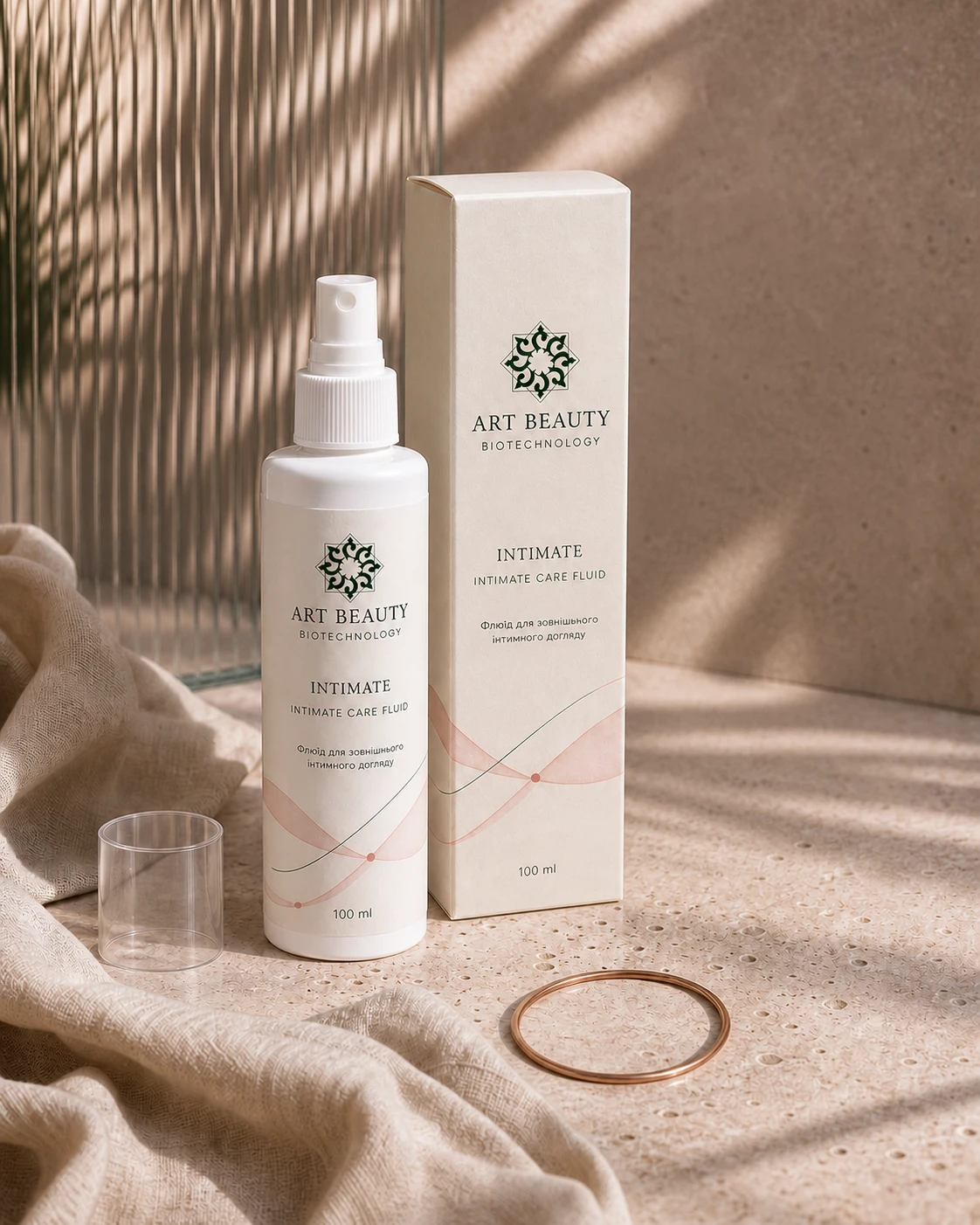
The external area is the essential boundary
The vulva is the external intimate area, while the vagina has its own natural cleaning processes. ACOG advises avoiding douching, perfumed deodorants and other vaginal hygiene products. The word “intimate” on a label is therefore not permission to use a product inside the body. Always check the stated application area and whether the formula must be rinsed away.
INTIMATE HYGIENE GEL is described as a rinse-off cosmetic gel specifically for the external intimate area. Its purpose does not extend to treating or preventing infection, or to changing natural processes inside the vagina. Unusual discharge or odour, itching, burning, pain, swelling or symptoms that do not resolve are reasons to consult a gynaecologist or another qualified professional instead of masking them with a new product.
Do less, and rinse with care
The INTIMATE HYGIENE GEL directions say to take a small amount in the palm, apply it to the external intimate area from front to back, foam and rinse with water. This sequence defines the ritual: external application, a small amount and complete rinsing. There is no need to leave the gel on longer, use it more often or combine it with fragranced sprays and wipes.
ACOG recommends careful hygiene and avoiding perfumed products on the inner vulva. Individual tolerance varies, so read the full INCI rather than trusting the category name alone. If discomfort appears after use, stop, rinse the product away and consider whether medical advice is appropriate.
Read the complete INCI, not only the word intimate
The INTIMATE HYGIENE GEL page lists cleansing ingredients, panthenol, hydrolysed sprouted wheat protein, clary sage extract, guar gum, essential oils and a Lactobacillus sp. fermented substrate. The list is not a score for “naturalness”; it lets you see the whole formula and check known personal restrictions. A product category by itself cannot guarantee compatibility for every person.
The presence of bacterial components does not demonstrate that the gel restores microflora, treats dysbiosis or prevents infection. Cosmetic-claim criteria do not allow an ingredient property to be transferred automatically to a finished product. Keep the choice practical: application area, rinse-off format, complete formula, directions and your individual response.
When to choose a product — and when to choose a consultation
If you are well, want a separate rinse-off product for external daily care and the complete formula fits your restrictions, you can consider INTIMATE HYGIENE GEL and use it exactly as directed. Introduce it without several other simultaneous changes so a possible response is easier to interpret. Cosmetic comfort is an individual experience, not a promised therapeutic result.
If the reason for buying is persistent itching, burning, pain, unusual discharge or odour, irritation after contact or recurring discomfort, the right next step is a consultation rather than another bottle. Treat the INTIMATE HYGIENE GEL page as information about a cosmetic product: it can help you check the ingredients and directions, but it cannot replace diagnosis.
SAVE BEFORE YOU BUY
Your quick checklist
- Use the product only on the external intimate area.
- Take a small amount and rinse completely with water.
- Never use the product for douching.
- Compare the complete INCI with known sensitivities.
- Seek professional advice for persistent symptoms.
Sources
Direct links to the research and documents used in this article. They correspond to the numbered citations above.